
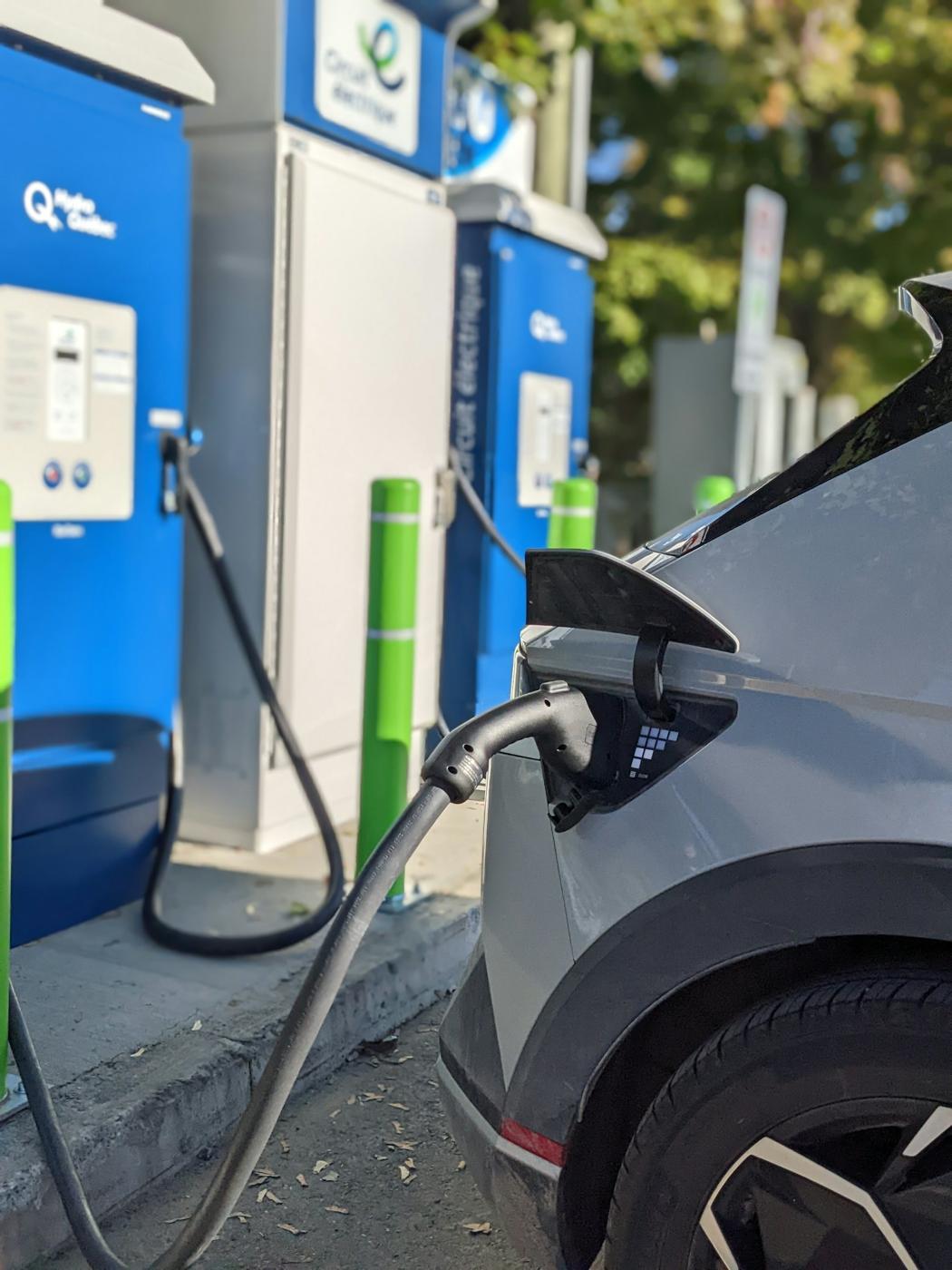
EV Charging Costs in All 50 States: The Complete 2026 Guide
What it really costs to charge an electric car at home and at public stations in every state, how that compares with gas, and a calculator to work out your own monthly bill.
The cost of charging an electric car depends on three things: how much you pay for electricity, how efficient your car is and where you plug in. The first one changes a lot from state to state. A kilowatt-hour of home electricity cost under 13 cents in Nevada and Louisiana in August 2026, and more than 47 cents in Hawaii, according to the U.S. Energy Information Administration (EIA). That is almost a four-fold difference for exactly the same miles.
This guide brings together the latest official prices for all 50 states and Washington, D.C.: home electricity from the EIA, public charging and gas from AAA. We turned them into the number that matters most, the cost to drive 100 miles, so you can compare charging and filling up on equal terms.
The short answer
Charging at home costs about $5 to $6 per 100 miles in most of the country, and between roughly $3.60 and $9 in all but one state. Hawaii is the exception at about $13.50. Public charging averages 2.3 times the home price, and in nine states it costs more per mile than gas. If you can charge at home, an EV is cheaper to fuel than a gas car in every state; if you rely on public chargers, the savings shrink or disappear.
How to calculate the cost to charge an EV
You only need two numbers: your electricity price and your car’s efficiency, which the EPA lists as kilowatt-hours per 100 miles on every new EV’s window sticker and on fueleconomy.gov.
Throughout this guide we use 28.6 kWh per 100 miles, the efficiency implied by the electric compact SUV in AAA’s 2026 Your Driving Costs study, and compare it with the gas compact SUV in the same study, which works out to about 26 miles per gallon. Using the same pair of vehicles keeps the comparison fair.
Your real cost may be a little higher: some energy is lost between the wall and the battery, and many utilities add fixed charges and taxes that the average price per kWh already partly includes. Treat these figures as a solid estimate, not a bill.
Calculate your monthly charging cost
Pick your state and your type of vehicle, then set your miles and how much of your charging happens at home. Prices update from the state table below.
Vehicle efficiencies are derived from AAA Your Driving Costs 2026 (energy cost at 15,000 miles and 18¢/kWh). Your own model may use more or less energy; check its rating on fueleconomy.gov.
EV charging cost by state: the full table
Home price is the average residential electricity price in August 2026 (EIA). Public price is the average at public charging stations listed by AAA on November 24, 2026, and gas is AAA’s state average for regular on the same day. Costs per 100 miles use 28.6 kWh for the EV and 26 mpg for the gas car. Type a state to filter the list.
| State | Home ¢/kWh | Home per 100 mi | Public ¢/kWh | Public per 100 mi | Gas $/gal | Gas per 100 mi |
|---|---|---|---|---|---|---|
| Alabama | 16.33¢ | $4.66 | 42.0¢ | $12.00 | $3.29 | $12.59 |
| Alaska | 29.41¢ | $8.40 | 45.6¢ | $13.02 | $4.22 | $16.13 |
| Arizona | 15.05¢ | $4.30 | 44.3¢ | $12.65 | $3.88 | $14.82 |
| Arkansas | 14.37¢ | $4.10 | 44.9¢ | $12.82 | $3.24 | $12.39 |
| California | 29.75¢ | $8.50 | 47.7¢ | $13.62 | $5.44 | $20.79 |
| Colorado | 17.17¢ | $4.90 | 39.4¢ | $11.25 | $3.40 | $12.99 |
| Connecticut | 24.51¢ | $7.00 | 38.2¢ | $10.91 | $3.88 | $14.84 |
| Delaware | 18.70¢ | $5.34 | 37.5¢ | $10.71 | $3.63 | $13.89 |
| District of Columbia | 25.98¢ | $7.42 | 39.5¢ | $11.28 | $4.04 | $15.46 |
| Florida | 14.99¢ | $4.28 | 41.7¢ | $11.91 | $3.43 | $13.11 |
| Georgia | 15.90¢ | $4.54 | 40.8¢ | $11.65 | $3.15 | $12.06 |
| Hawaii | 47.18¢ | $13.47 | 55.2¢ | $15.77 | $5.59 | $21.36 |
| Idaho | 13.37¢ | $3.82 | 41.2¢ | $11.77 | $3.85 | $14.72 |
| Illinois | 19.32¢ | $5.52 | 43.3¢ | $12.37 | $3.83 | $14.66 |
| Indiana | 17.02¢ | $4.86 | 43.3¢ | $12.37 | $2.97 | $11.37 |
| Iowa | 17.06¢ | $4.87 | 33.8¢ | $9.65 | $3.38 | $12.94 |
| Kansas | 15.47¢ | $4.42 | 32.4¢ | $9.25 | $3.38 | $12.93 |
| Kentucky | 13.80¢ | $3.94 | 42.8¢ | $12.22 | $3.31 | $12.64 |
| Louisiana | 12.87¢ | $3.68 | 49.7¢ | $14.19 | $3.22 | $12.33 |
| Maine | 32.11¢ | $9.17 | 40.9¢ | $11.68 | $3.83 | $14.66 |
| Maryland | 21.40¢ | $6.11 | 35.1¢ | $10.02 | $3.65 | $13.94 |
| Massachusetts | 30.48¢ | $8.71 | 39.8¢ | $11.37 | $3.79 | $14.48 |
| Michigan | 22.99¢ | $6.57 | 40.6¢ | $11.60 | $3.67 | $14.05 |
| Minnesota | 17.20¢ | $4.91 | 36.9¢ | $10.54 | $3.43 | $13.13 |
| Mississippi | 14.43¢ | $4.12 | 42.4¢ | $12.11 | $3.36 | $12.84 |
| Missouri | 16.02¢ | $4.58 | 32.9¢ | $9.40 | $3.31 | $12.65 |
| Montana | 15.57¢ | $4.45 | 43.0¢ | $12.28 | $3.47 | $13.27 |
| Nebraska | 13.54¢ | $3.87 | 36.6¢ | $10.45 | $3.54 | $13.54 |
| Nevada | 12.72¢ | $3.63 | 42.7¢ | $12.20 | $4.67 | $17.85 |
| New Hampshire | 27.64¢ | $7.89 | 48.0¢ | $13.71 | $3.81 | $14.57 |
| New Jersey | 24.61¢ | $7.03 | 43.4¢ | $12.40 | $3.79 | $14.49 |
| New Mexico | 16.51¢ | $4.72 | 37.4¢ | $10.68 | $3.44 | $13.15 |
| New York | 28.65¢ | $8.18 | 40.4¢ | $11.54 | $3.99 | $15.27 |
| North Carolina | 14.95¢ | $4.27 | 41.3¢ | $11.80 | $2.97 | $11.36 |
| North Dakota | 13.31¢ | $3.80 | 44.8¢ | $12.79 | $3.47 | $13.27 |
| Ohio | 19.38¢ | $5.53 | 43.0¢ | $12.28 | $3.01 | $11.50 |
| Oklahoma | 14.82¢ | $4.23 | 42.7¢ | $12.20 | $3.08 | $11.76 |
| Oregon | 15.92¢ | $4.55 | 38.9¢ | $11.11 | $4.26 | $16.31 |
| Pennsylvania | 21.77¢ | $6.22 | 42.1¢ | $12.02 | $4.05 | $15.51 |
| Rhode Island | 28.18¢ | $8.05 | 38.9¢ | $11.11 | $3.65 | $13.98 |
| South Carolina | 15.76¢ | $4.50 | 42.8¢ | $12.22 | $3.19 | $12.18 |
| South Dakota | 15.15¢ | $4.33 | 36.6¢ | $10.45 | $3.43 | $13.10 |
| Tennessee | 13.42¢ | $3.83 | 43.4¢ | $12.40 | $3.25 | $12.42 |
| Texas | 15.91¢ | $4.54 | 43.5¢ | $12.42 | $3.10 | $11.87 |
| Utah | 13.31¢ | $3.80 | 35.5¢ | $10.14 | $3.83 | $14.64 |
| Vermont | 23.84¢ | $6.81 | 37.5¢ | $10.71 | $3.90 | $14.93 |
| Virginia | 17.64¢ | $5.04 | 42.9¢ | $12.25 | $3.56 | $13.61 |
| Washington | 14.63¢ | $4.18 | 39.1¢ | $11.17 | $4.63 | $17.70 |
| West Virginia | 16.31¢ | $4.66 | 52.3¢ | $14.94 | $3.68 | $14.09 |
| Wisconsin | 19.41¢ | $5.54 | 42.8¢ | $12.22 | $3.35 | $12.81 |
| Wyoming | 14.43¢ | $4.12 | 42.6¢ | $12.17 | $3.73 | $14.27 |
Sources: EIA Electric Power Monthly, Table 5.6.A (August 2026); AAA EV charging prices; AAA state gas price averages (November 24, 2026).
What charging costs per month
Here is what a month of driving costs at national average prices, for the electric compact SUV charged at home or at public stations, and for the comparable gas SUV.
| Miles per month | EV, home charging | EV, public charging | Gas SUV |
|---|---|---|---|
| 500 miles | $26 | $60 | $69 |
| 1,000 miles | $52 | $120 | $138 |
| 1,500 miles | $78 | $180 | $207 |
| 2,000 miles | $104 | $240 | $276 |
U.S. average home electricity 18.16¢/kWh (EIA, August 2026), public charging 42¢/kWh and gas $3.61/gal (AAA, November 2026).
The average American drives roughly 1,000 to 1,200 miles a month, so most EV owners who charge at home add somewhere between $50 and $65 a month to their electric bill at national average prices. Find your state in the table above for a closer figure.
Cheapest and most expensive states to charge at home
10 cheapest states
- Nevada$3.63
- Louisiana$3.68
- North Dakota$3.80
- Utah$3.80
- Idaho$3.82
- Tennessee$3.83
- Nebraska$3.87
- Kentucky$3.94
- Arkansas$4.10
- Mississippi$4.12
10 most expensive states
- Hawaii$13.47
- Maine$9.17
- Massachusetts$8.71
- California$8.50
- Alaska$8.40
- New York$8.18
- Rhode Island$8.05
- New Hampshire$7.89
- District of Columbia$7.42
- New Jersey$7.03
Cost to drive 100 miles charging at home (28.6 kWh/100 mi), EIA residential prices for August 2026.
The most expensive states cluster in New England, New York, California, Alaska and Hawaii. The cheapest are spread across the South, the Mountain West and the northern Plains. Even in Maine, the most expensive state on the mainland, home charging still costs about $9 per 100 miles, less than the same miles in the gas SUV at Maine’s gas price.
Why electricity prices differ so much by state
Residential electricity prices reflect how a state generates its power, how far that power has to travel and how the grid is paid for. States with large amounts of hydropower or cheap natural gas, such as Nevada, Louisiana, Idaho and Washington, tend to have low rates. States that import much of their fuel or have high delivery costs, such as Hawaii, Alaska and those in New England, pay the most.
Prices are also rising. The U.S. average residential price was 18.16¢/kWh in August 2026, up from 17.57¢ a year earlier, according to the EIA. The jump was much larger in some states: Hawaii went from 38.53¢ to 47.18¢. Others moved the opposite way; Connecticut fell from 30.17¢ to 24.51¢. Because rates change, it is worth checking your own bill for the price you actually pay per kWh, including delivery charges.
Where an EV saves the most on fuel
Cheap electricity is only half the story; expensive gas matters just as much. These are the states where charging at home saves the most over a year of 12,000 miles, compared with the 26-mpg gas SUV at today’s state gas price.
Biggest yearly savings
- Nevada$1,707
- Washington$1,623
- California$1,476
- Oregon$1,412
- Idaho$1,309
- Utah$1,300
- Arizona$1,263
- Wyoming$1,218
- Nebraska$1,161
- North Dakota$1,137
Smallest yearly savings
- Maine$659
- Massachusetts$692
- Rhode Island$711
- Ohio$715
- Indiana$782
- New Hampshire$801
- New York$851
- North Carolina$851
- Wisconsin$873
- Texas$879
Nevada and Washington combine cheap electricity with some of the highest gas prices in the country, so the gap is widest there. In New England the savings are smaller because electricity is expensive, but they are still real: even in Maine, home charging saves about $660 a year at 12,000 miles.
Fuel is only part of the cost of owning a car. Depreciation, insurance and fees usually matter more, and they often favor hybrids. See our full comparison in EV vs Hybrid vs Gas: The True Cost of Ownership.
Home vs public charging
Where you plug in changes your cost more than any other choice. On average across the states, public charging costs about 2.3 times the home price per kWh.
In nine states (Arkansas, Indiana, Louisiana, North Carolina, Ohio, Oklahoma, South Carolina, Texas and West Virginia) relying only on public charging cost more per 100 miles than driving the gas SUV at November 2026 prices. If you cannot charge at home in those states, an EV is unlikely to save money on fuel; a hybrid may be a better fit.
What it costs to set up home charging
Most EVs come with a cord that plugs into a regular 120-volt outlet (Level 1). It is slow, adding only a few miles of range per hour, but it costs nothing to install. Many owners add a 240-volt Level 2 charger, which can refill most batteries overnight.
According to Qmerit, the largest EV charger installation network in the U.S., a home Level 2 installation typically costs $749 to $2,500, with about $1,700 for a standard job. The price rises if your electrical panel needs an upgrade or the charger is far from the panel. Some utilities offer rebates on chargers or installation, so check before you buy. We cover this in detail in our charging guides.
How many public chargers each state has
AAA’s charging price tracker listed more than 139,000 public charging ports across the 50 states and D.C. in November 2026. They are concentrated in a few states:
Number of public chargers listed by AAA on November 24, 2026.
Fewer chargers does not always mean higher prices: Kansas, Missouri and Iowa have modest networks but the cheapest public charging in the country, all under 34¢/kWh. It does mean that in rural states, planning long trips around charging stops matters more.
Five ways to pay less to charge
- Charge at home whenever you can. It is the cheapest electricity you will find in almost every state.
- Ask your utility about time-of-use or EV rates. Many utilities charge less at night, when demand is low. Schedule charging in your car’s app or charger to start after the cheap period begins.
- Use workplace or free charging when it is offered. Some employers and retailers offer low-cost or free Level 2 charging.
- Save fast charging for road trips. Daily fast charging can make an EV as expensive to run as a gas car.
- Watch the weather. AAA research published in May 2026 found that extreme heat and cold reduce EV efficiency and range, which raises the cost per mile. Preconditioning the cabin while still plugged in helps.
Real-world examples
Houston commuter
Texas, 1,200 miles a month, all at home.
EV: about $55 a month. Gas SUV: about $143.
Saves roughly $1,050 a year on fuel.
Los Angeles driver
California, 1,000 miles a month, 80% at home.
EV: about $95 a month. Gas SUV: about $208.
California’s high gas prices keep the EV well ahead despite expensive power.
Ohio apartment renter
Ohio, 1,000 miles a month, public chargers only.
EV: about $123 a month. Gas SUV: about $115.
Without home charging, the EV costs more to fuel than gas here.
Estimates using the state prices in the table above, 28.6 kWh/100 mi and a 26-mpg gas SUV.
Frequently asked questions
How much does it cost to fully charge an electric car?
Multiply the usable battery size by your electricity price. A 75 kWh battery charged from empty at the U.S. average home price of 18.16¢/kWh costs about $13.60. In practice most drivers charge from 20% to 80%, which uses less than half of that.
Which state has the cheapest electricity for charging an EV?
In August 2026, Nevada (12.72¢/kWh) and Louisiana (12.87¢) had the lowest average residential prices, according to the EIA, followed by North Dakota and Utah.
Is it cheaper to charge an EV than to buy gas?
At home, yes, in every state. At public chargers it depends on the state: in nine states, public charging cost more per mile than gas in November 2026.
How much will an EV add to my electric bill?
About $52 a month at the national average price for 1,000 miles of driving in a compact SUV. It can be less than $40 in the cheapest states and over $130 in Hawaii.
Why are public chargers so expensive?
Public stations have to pay for the equipment, installation, maintenance and demand charges from the utility, and fast chargers use very high power. Those costs are built into the price per kWh.
Our complete guides: EV vs Hybrid vs Gas: The True Cost of Ownership, EV and Hybrid Maintenance and Repair Costs, Hybrid vs Plug-in Hybrid vs Electric.
- EIA: Average price of electricity by state, Table 5.6.A (August 2026)
- AAA: EV charging prices by state
- AAA: state gas price averages
- AAA: Your Driving Costs 2026
- AAA: temperature impacts on EV and hybrid efficiency (May 2026)
- fueleconomy.gov: official EPA efficiency ratings
- Qmerit: how much EV charger installation costs